


Miranda's Farms
Kaʻū Geisha - Anaerobic Natural
Kaʻū Geisha - Anaerobic Natural
Couldn't load pickup availability
This is the coffee that won. We grew it, we processed it, and we roasted it.
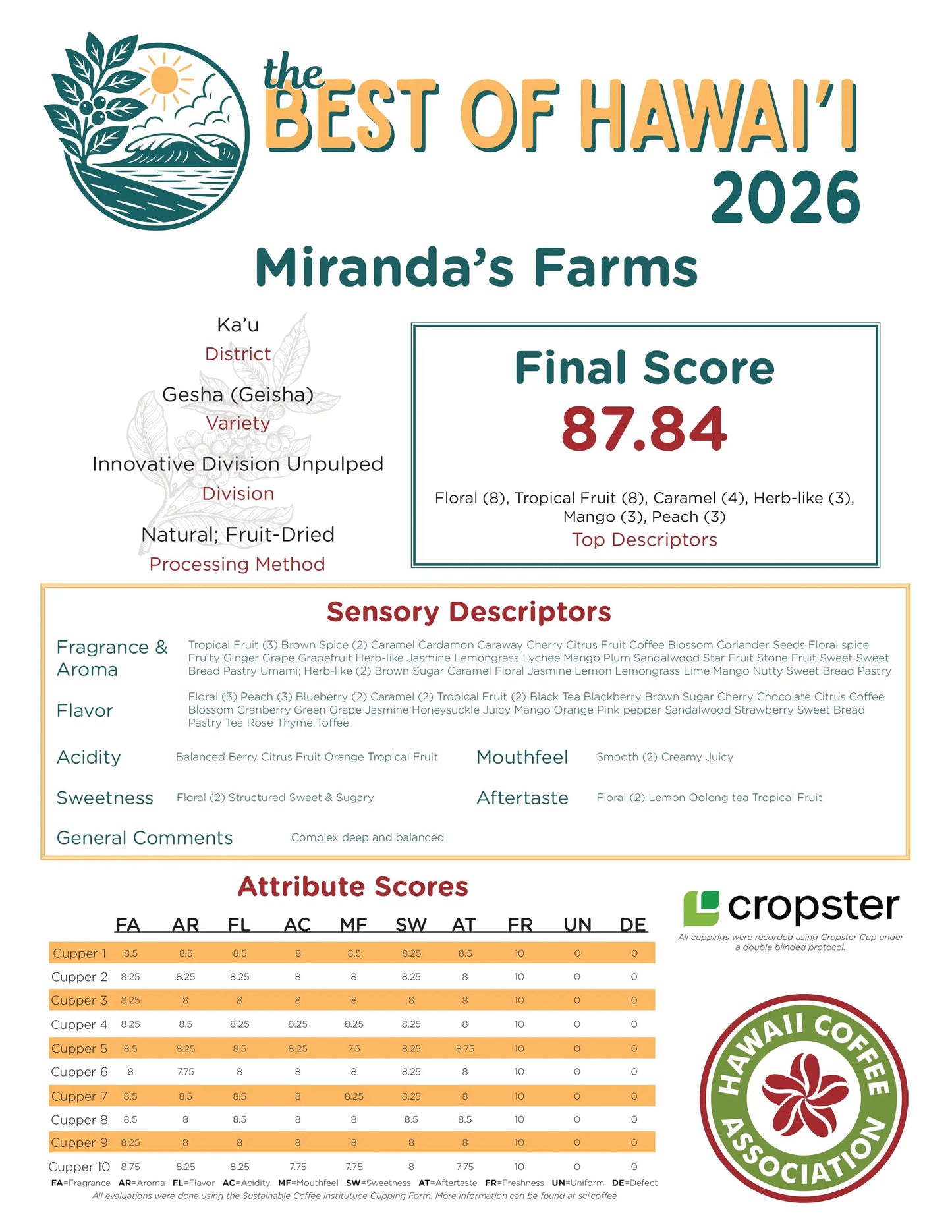
- 1st place: Best Coffee, State of Hawaiʻi 2026
- 1st place: Best Coffee, Kaʻū District
- 1st place: Innovative Division, Unpulped
- 87.84: Best of Hawaiʻi, Hawaiʻi Coffee Association
Floral and tropical, mango, peach and caramel over a creamy body.
Gesha yields less than half of what a Typica block gives, and it only rewards you if the elevation and the climate cooperate. That is why so few farms plant it. Ours grows in Nāʻālehu at 2,100 feet, the highest ground we farm, in deep volcanic soil on the south slope of Mauna Loa. In Hawaiʻi this variety is associated almost entirely with Kona. In Kaʻū it is close to unheard of.
What the judges found
Entered in the Innovative Unpulped division as an anaerobic natural, the cherry ferments whole in a sealed tank on its own native yeasts, no inoculation, then dries intact. Ten cuppers, double-blind protocol, zero defects. It took first place in its division, first in Kaʻū, and first in the state.
“Complex, deep and balanced.”
- Cupping panel, Best of Hawaiʻi 2026
Top descriptors across the panel: floral, tropical fruit, caramel, mango, peach. Balanced citric acidity, smooth and creamy mouthfeel, a floral oolong-tea finish.
The block has done this before
We want to be precise, because these are two different coffees. The year before this win, green from this same block processed as a champagne-yeast natural, and roasted by Paradise Coffee Roasters was scored 96 points by Coffee Review:
“Exuberant, exquisitely articulated. Notes of concord grape, lychee, star jasmine, honeycomb, and cocoa nib. Bright yet seamless structure, with sparkling acidity and plush, silky mouthfeel. The finish is long and perfumed.”
- Coffee Review, September 2025
That score belongs to that lot, that process, that roaster. It is not this bag. What it tells you is that the ground is capable and this year, working it ourselves from cherry to roast, we took first in the state with it.
Tasting panel
- Notes: floral, tropical fruit, mango, peach, caramel
- Body: Smooth, creamy, juicy
- Acidity: Balanced, citrus, berry, tropical fruit
- Finish: Floral, lemon, oolong tea
- Varietal: Gesha
- Process: Anaerobic natural, native fermentation, no added yeast
- Origin: Kaʻū, Hawaiʻi |100% single family farm
- Elevation: 2,100 ft (Nāʻālehu)
- Harvest: 2025/26 · Lot size: 250 bags, 4 oz each
Light medium, and why there is no dark
Light is where this coffee shows what it is: the jasmine and the fruit stay intact. This is how we recommend trying it, and it is how it was cupped when it won. Medium gives up some top notes for body and sweetness, and is the friendlier cup if you usually drink darker coffee. We do not offer a dark roast, it would burn off exactly the aromatics you are paying for. If you want dark, our Typica and Red Catuai are built for it.
How to brew it
Not in an auto-drip machine. 15 g of coffee to 250 ml of water at 200 °F, in a pour-over, V60 or Chemex, ground medium-fine. Choose Whole Bean and grind right before you brew. With this coffee the difference is not subtle.
One size, one lot, one harvest
4 oz: about eight cups, or two weekends of paying attention. There is no 8 oz, no 16 oz and no 5 lb, and there will not be. The competition lot is 250 bags. When they are gone the next chance is next harvest, from trees that will have had a different year.
Roasted the day we pack it, out of Hawaiʻi within 1–2 business days. Free shipping on orders over $75 applied automatically, no code needed.


Miranda’s Farms Geisha coffee is honestly so good! You can really taste the quality, and it has such a smooth, unique flavor. It’s the kind of coffee you want to slow down and enjoy with every sip. You can tell a lot of care, love, and passion goes into a little cup of coffee! Definitely a coffee worth trying! ☕️
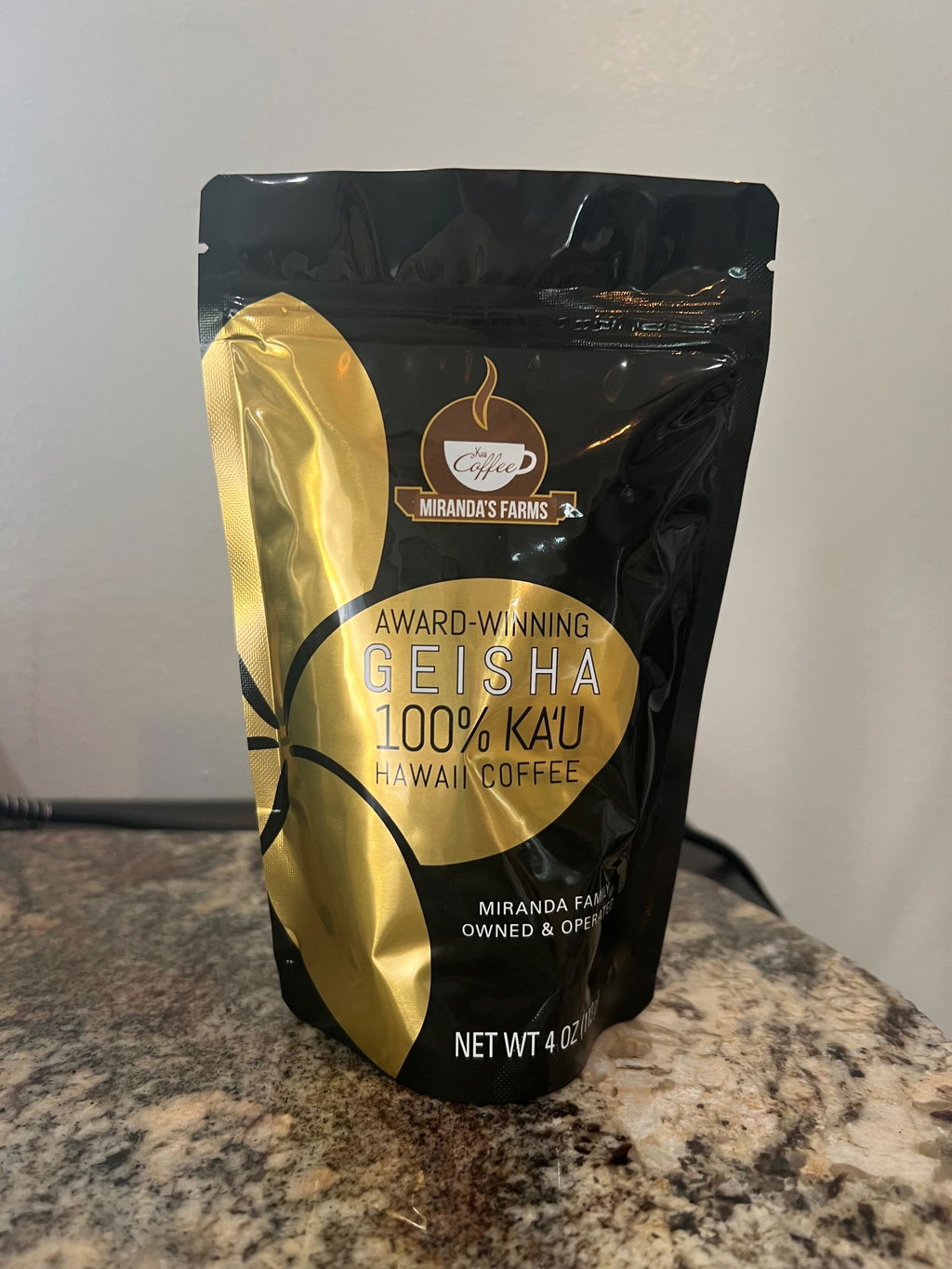
This coffee is truly out of this world! I came to visit Miranda’s Farms with my friends in California and met Berta Miranda the owner. She was a sweetheart, she kindly let us sample a fresh pour over of her best coffee which was this geisha. I fell in love with this coffee, it’s a coffee that smooth, creamy, floral, clean and airy. She explained it was almost a tea but in coffee form and that was amazing. I truly recommend buying this award winning coffee!
This coffee is truly a unique and unforgettable experience! It has a smooth, delicate flavor with beautiful floral and fruity notes, a wonderful aroma, and a clean finish. Every sip feels special, with a perfect balance of sweetness and complexity. You can really appreciate the quality and craftsmanship that go into producing this exceptional coffee. Definitely worth trying for any coffee lover looking for something extraordinary!
An amazing and unique coffee.
We drove down to Naalehu mostly to break up the trip to the volcano and ended up staying way longer than planned. The gesha is the one that got me really floral, almost like jasmine tea, but sweet. Not the heavy dark roast thing you get everywhere else on the island. Berta was the one who poured it and she talked us through the whole farm. Bought two bags. Should've bought four